

Hey there! As a silicone extrusion supplier, I've been getting a lot of questions lately about the fatigue resistance properties of silicone extrusions. So, I thought I'd take the time to break it down for you all.
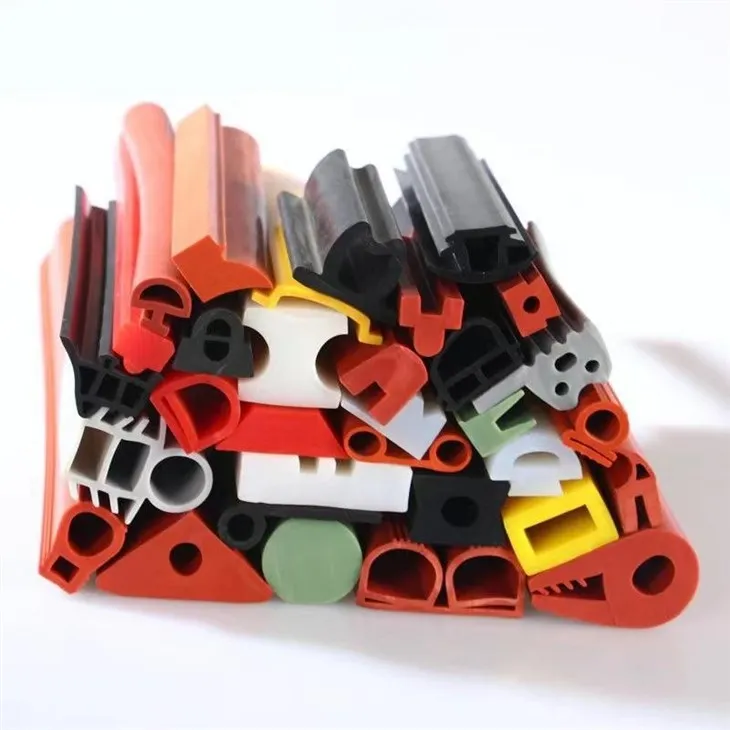

First off, let's talk about what fatigue resistance actually means. Fatigue resistance is the ability of a material to withstand repeated stress and strain without failing. In the case of silicone extrusions, this means that the material can handle being bent, stretched, compressed, or otherwise deformed multiple times without breaking, cracking, or losing its shape.
One of the key factors that makes silicone such a great material for fatigue resistance is its high elasticity. Silicone has a very low modulus of elasticity, which means it can stretch and deform easily without permanent damage. This allows it to absorb and distribute stress evenly, reducing the likelihood of fatigue failure.
Another important property of silicone is its excellent resilience. Resilience is the ability of a material to return to its original shape after being deformed. Silicone has a high resilience, which means it can bounce back quickly after being stretched, compressed, or bent. This helps to prevent the material from developing permanent set or deformation, which can lead to fatigue failure over time.
Silicone also has good chemical resistance, which is important for applications where the extrusion may be exposed to chemicals, solvents, or other harsh environments. Chemical resistance helps to prevent the material from deteriorating or degrading, which can weaken it and make it more susceptible to fatigue failure.
In addition to its physical properties, silicone extrusions can also be formulated with additives and fillers to enhance their fatigue resistance. For example, adding carbon black or other reinforcing agents can increase the strength and stiffness of the silicone, making it more resistant to fatigue. Other additives, such as antioxidants and UV stabilizers, can help to protect the silicone from environmental factors that can cause degradation and fatigue.
Now, let's take a look at some of the specific applications where fatigue resistance is important for silicone extrusions. One of the most common applications is in sealing and gasketing. Silicone extrusions are often used to create seals and gaskets in a variety of industries, including automotive, aerospace, and construction. In these applications, the extrusion needs to be able to withstand repeated compression and relaxation cycles without losing its sealing ability. A high fatigue resistance ensures that the seal will remain effective over a long period of time, even under harsh conditions.
Another application where fatigue resistance is crucial is in vibration isolation. Silicone extrusions are used to dampen vibrations and reduce noise in a wide range of equipment and machinery. In these applications, the extrusion needs to be able to absorb and dissipate energy from the vibrations without failing. A high fatigue resistance ensures that the extrusion will maintain its performance over time, even when subjected to continuous vibration.
Silicone extrusions are also used in electrical insulation applications. In these applications, the extrusion needs to be able to withstand repeated bending and flexing without breaking or losing its electrical properties. A high fatigue resistance helps to ensure that the insulation will remain intact and effective, preventing electrical shorts and other problems.
If you're in the market for silicone extrusions, we offer a wide range of products that are designed to meet your specific needs. For example, we have T Shaped Rubber Seal Strip, which are perfect for sealing applications where a high-fatigue resistance is required. Our Silicone Rubber Door Seal are also designed to withstand repeated opening and closing, ensuring a long-lasting and effective seal. And our Silicone Rubber Profiles are available in a variety of shapes and sizes, making them suitable for a wide range of applications.
If you're interested in learning more about our silicone extrusions or would like to discuss your specific requirements, please don't hesitate to get in touch. We're always happy to help and can provide you with samples, technical data, and pricing information. Whether you're looking for a standard product or need a custom solution, we have the expertise and experience to meet your needs.
In conclusion, the fatigue resistance properties of silicone extrusions make them an excellent choice for a wide range of applications. Their high elasticity, resilience, chemical resistance, and ability to be formulated with additives make them a durable and reliable material. So, if you're looking for a solution that can handle repeated stress and strain, consider using silicone extrusions. Contact us today to start the conversation and find the perfect product for your needs.
References
- "Silicone Rubber: Properties and Applications." Rubber Manufacturers Association.
- "Fundamentals of Rubber Technology." K. N. Ninan and C. K. S. Pillai.


